Bharatanatyam
Tamil Nadu; grounded geometry, intricate rhythm, expressive storytelling, and Carnatic music.
A living classical tradition
Explore the history, technique, music, meaning, and continuing practice of Bharatanatyam and India’s classical dance traditions.
Indian classical dance is not one uniform style. Each tradition has distinctive histories, movement principles, music, costume, repertoire, languages, and performance contexts. The commonly recognized classical forms are introduced below as starting points—not as complete definitions.
Tamil Nadu; grounded geometry, intricate rhythm, expressive storytelling, and Carnatic music.
North India; footwork, spins, rhythmic improvisation, gesture, storytelling, and Hindustani music traditions.
Kerala; highly codified dance-drama, elaborate makeup and costume, percussion, gesture, and epic narrative.
Andhra Pradesh and Telangana; dance-drama roots, lively movement, expressive narrative, and Carnatic music.
Manipur; flowing movement, devotional traditions, distinctive percussion, and varied solo and group forms.
Kerala; graceful, circular movement, lyrical pacing, expressive interpretation, and regional music traditions.
Odisha; sculptural tribhanga, lyrical torso movement, rhythmic footwork, and Odissi music.
Assam; developed in Vaishnavite monastic settings, joining dance, drama, music, and devotional narrative.
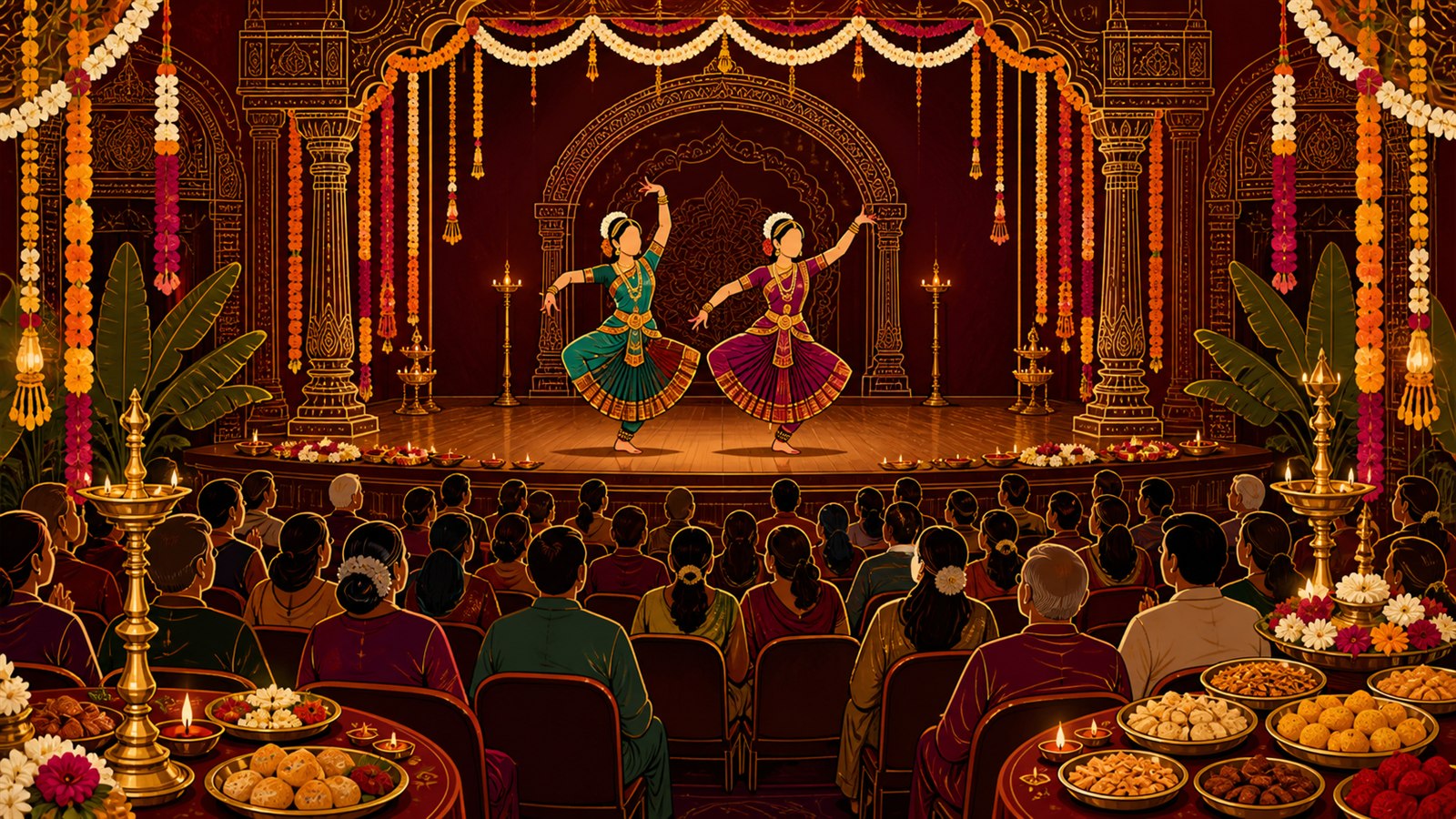
Learning about another form begins with its own practitioners, terminology, music, and history. Similar-looking gestures do not necessarily carry the same technique or meaning across traditions. Curiosity is strongest when paired with precision and respect.